Realising the potential of Science and Innovation for the Bioeconomy
FCB Advisory Services is committed to making a meaningful contribution to the development of biological knowledge and agricultural innovation that contributes to the bioeconomy.
Biological knowledge and agricultural innovation often fail to deliver value. Not because of poor science but because the key constraints to realising value are often not identified or are addressed in isolation.
From Complexity to Clarity
FCB Advisory Services helps research organisations, biotechnology and renewable fuels ventures move from complexity to clarity, enabling them to make better decisions and achieve better outcomes.
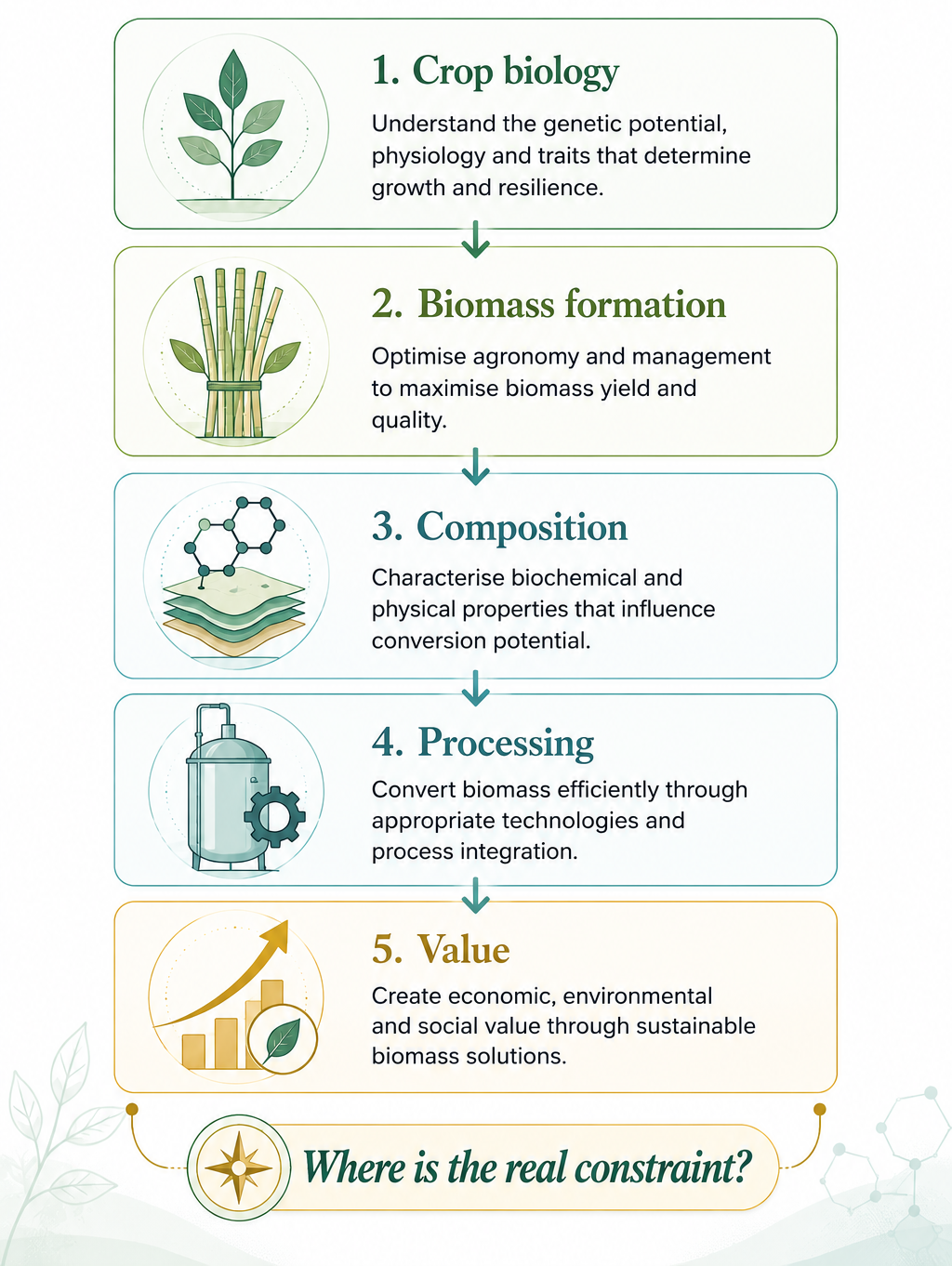
One integrated approach – from diagnosis to decision and knowledge
Constraint Diagnostics
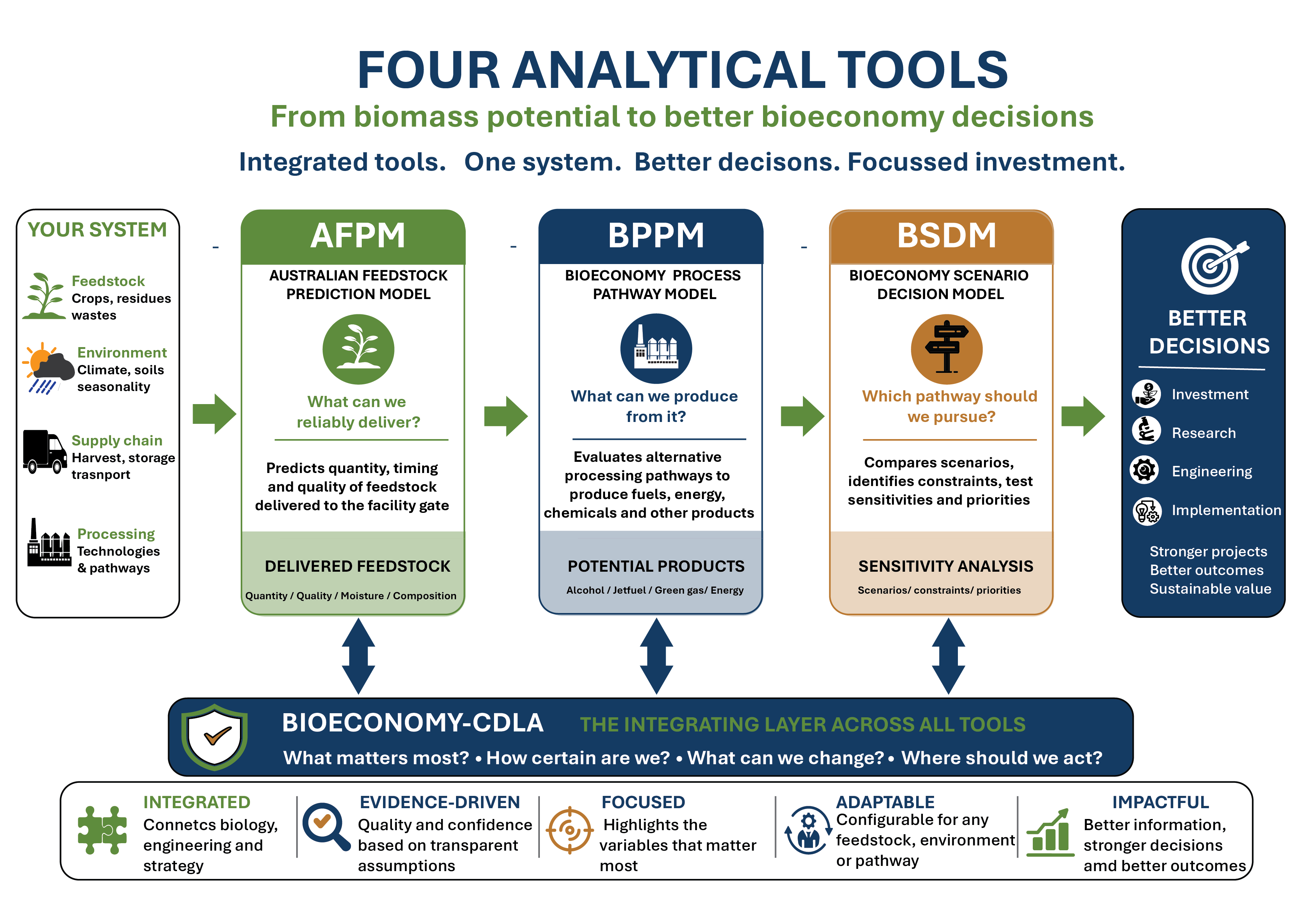
Our modelling framework (AFPM, BPPM and BSDM) quantifies the biological, engineering and system relationships needed to identify the constraints that actually control performance.
Strategic Decision Support
Our analytical tools combined with the FCB Advisory Services Bioeconomy-CDLA identify where intervention, investment or further evidence is most likely to change the outcome. Learn more →
Knowledge Development
Develop, integrate and share knowledge through insights, research, publications, technical resources and scientific engagement.
FCB Advisory has developed an integrated suite of analytical tools that connects biological production, feedstock supply, processing pathways and strategic decision-making.
The tools can be configured for any client-specific feedstock, production environment, supply chain or processing pathway. Bioeconomy-CDLA operates across the analytical framework, identifying the variables that matter most, how confidently they are understood and where intervention is most likely to improve the outcome.
What’s new
Perspective 4 — Technology Cannot Compensate for Poor Biomass
Too often, discussions about renewable fuels focus on improving conversion technologies while giving comparatively little attention to the biological characteristics of the feedstock itself.
The Bioeconomy‑CDLA Framework
This framework provides a structured approach to interconnected biological, feedstock, engineering, logistics and commercial decisions to identify critical variables or intervention points that can materially improve a project outcome or reduce decision risk.
Where is the real constraint in your project?
Complex projects rarely need more disconnected information. They need a clear view of what is limiting performance, which uncertainties matter and where intervention will create the greatest value.